0

MAGL Spring Reading List

Posted by Chris on Mar 11, 2011 in Church, Culture, God, Life

Today in the mail a bunch of new friends came.  They’ll be hanging out with me for the next two months as I prepare for two weeks of  Masters of Arts of Global Leadership classes through Fuller Theological seminary.  They are:

Community of Character by Stanley Hauerwas.  When I first read Hauerwas’s The Peaceable Kingdom it sent me down a path that has defined much of my thinking ever since.  I’m super excited for more.

Experiencing the Trinity by Darrell Johnson.

Renovation of the Heart by Dallas Willard.  I’ve been through this once before on audio.  Anyone who I’ve ever talked to about books knows that there’s no one I hold in higher esteem that Willard.

Spiritual Direction by Henri Nouwen.  I’m not sure how I’ve made it this far in life without reading Nouwen.  Time to change that

The Ascent of a Leader by Thrall, McNichol and McElrath.  Leadership books always inspire me toward greater focus.

Spiritual Leadership by Blackaby.

The Next Christendom: The Coming of Global Christianity, by Phillip Jenkins.  More of a sociological study for the “Global” in MAGL.

Announcing the Kingdom by Glasser, Van Engen and Redford.  Written by the Fuller Missions staff, this looks to be the heaviest theological work I’ll be doing this quarter.

Open Secret: An Introduction to the Theology of Mission by Lesslie Newbigin (not pictured). As I’ve said before, Newbigin is responsible for launching much of the conversation in the Church today.  This will be important.

Time to get to work!

Related Posts:

Tags: , , , , , ,

 
1

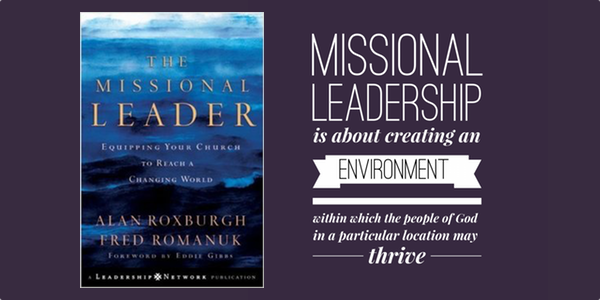
6 Charges From the Guy Who Coined the Term “Missional”

Posted by Chris on Feb 7, 2011 in Church, Culture

The term “missional” has gotten so bogged down with baggage from previous movements that it’s hard to know what it means.  The story goes that Leslie Newbigin coined the term after returning to England from a lifetime of mission work in India.  The are a list off essential changes the Church must undergo from his essay “Can the West Be Converted.”  You can, and should read the full work at Newbigin.net. All edits/emphasis are mine.

1. Ditch the Professionals

“I would put first the declericalizing of theology so that it may become an enterprise…in that corner of the private sector which our culture labels “religion,” but rather in the public sector where God’s will as declared in Jesus Christ is either done or not done in the daily business of nations and societies, in the councils of governments, the boardrooms of trans-national corporations, the trade unions, the universities and the schools.”

2. We’re Banking on the Sky to Fall. “Second, I would place the recovery of that apocalyptic strand of the New Testament teaching without which Christian hope becomes merely hope for the survival of the individual and there is no hope for the world. The silencing of the apocalyptic notes of the Gospel is simply part of the privatization of religion by which modern culture has emasculated the biblical message.”

3.  Knowing Jesus Doesn’t Mean You Know Everything

“…I would put the need for a doctrine of freedom which rests not on the ideology of the Enlightenment but on the Gospel itself. The world will rightly distrust any claim by the Church to a voice in public affairs… But the freedom which the Enlightenment won rests upon an…illusion of autonomy – and it therefore ends in new forms of bondage. Yet we have no right to say this until we can show that we have learned our lesson: that we understand the difference between bearing witness to the truth and pretending to possess the truth

4. Kill the Denominations

“…I would affirm the need for a radical break with that form of Christianity which is called the denomination. Sociologists have rightly pointed out that the denomination (essentially a product of North American religious experience in the past two hundred years) is simply the institutional form of a privatized religion. The denomination is the outward and visible form of an inward and spiritual surrender to the ideology of our culture. Neither separately nor together can the denominations become the base for a genuinely missionary encounter with our culture.

5. Remember, Most the World’s Christians Live in the Southern Hemisphere

There will be the need to listen to the witness of Christians from other cultures. The great new asset which we have for our missionary task is the presence among us of communities of Christians nourished in the cultures of Asia, Africa, and the West Indies. We need their eyes to see our culture afresh.

6. We need more than the weapons of the world

But finally, and this is fundamental, there will be the need for courage. Our wrestling is not against flesh and blood but against the principalities and powers – realities to the existence of which our privatized culture has been blind. To ask, “Can the West be converted?” is to align ourselves with the Apostle when he speaks of “taking every thought captive to Christ,” and for that – as he tells us – we need more than the weapons of the world.

Related Posts/Links

- Has the Missional Church Already Failed? (and the original article that inspired my own)
- A multipart review of Alan Hirsch’s Forgotten Ways

Related Posts:

Tags: , , , ,

 
2

Forgotten Ways, Chapters 3 & 4

Posted by Chris on Jun 4, 2010 in Church

Check out part 1 of my thoughts on Hirsch’s The Forgotten Ways here.

Reading through chapter 3, I found myself almost giddy considering the simple core truth of the Christian faith: Jesus is Lord.  Tradition is nice.  Theology is helpful.  But the core element that catalyzed the first century Jesus movement, is spreading throughout China and has been at the center of all great Jesus movement is the life changing confession that Jesus is Lord.

Hirsch unpacks just how powerful this would be in a polytheistic society, where one is living in constant fear of upsetting one deity or another.  He compares this to the false claim of Communist state as Lord, as well as exposing America’s own polytheism, the worship of money, power, health, etc.

He also points out the tendency of Christians to a dangerous syncretism.  His example of how the false god of comfort and power got mixed up with the Church in South Africa to create apartheid is a chilling reminder of what could happen to us.

Chapter 4 makes the argument that powerful Jesus movements are little more than disciple making systems.  He quotes Neil Cole of Church Multiplication Associates saying “we want to lower the bar of how Church is done and raise the bar of what it means to be a disciple.”

The primary barrier to disciple-making is consumerism, both inside and outside the church.  Our culture is set up to make us disciples of consumerism, we consume food, art, and even identities.  We take this mindset with us, expecting to be “fed” at church.

Secondly, our current system of religious education also inhibits disciple-making.  Unlike Jesus disciples, who met with him day in and day out, we remove a select few and pump them full of book learning, then return them to the church.  This may help them learn how to think, but it often does little to help them live more like Jesus, and lead others to do the same.

Hirsch’s accusations are clear: we have added so much to the gospel and so much to the way we teach about Jesus, that it impossible for our current way of being church to spread.

What do you think?  Have you seen a simpler, more effective Church?

Related Posts:

Tags: , , , , , ,

 
0

Verge Reflections, Day 3

Posted by Chris on Feb 8, 2010 in Church

The Verge Conference ended with a rally.  Local boy John Burke led off by saying “if the formerly unchurched are not leading the church, the church is dying.” Compared to some of the cutting edge thinkers that show up at these conferences, John’s methods may seem a little bit traditional.  However, the fruit, Gateway Church, fits his description perfectly.  All talk of missional-ness doesn’t really matter if you don’t have the fruit.

Jeff Vanderstelt said what should be obvious: do life the way you do normally, just with gospel intentionality.  It’s not that tough.  Hang out with your friends-including those who don’t know Christ.  Dave Gibbons suggested that we walk through crowds slowly, seeing the blessing of God on each person.

Francis Chan ended the conference by marching through each book of the New Testament, showing how pain and persecution are unavoidable when living a missional life.  Having accidentally stumbled into more than one fox holes, I know this to be very true.  I just hope that the people of Christ represented at Verge are ready for the pain, because the world needs us.

Related Posts:

Tags: , , , , , , , , , ,

 
1

Jesus: An Alternative to Being Missional

Posted by Chris on Jan 26, 2010 in Church, Culture, God, Life

I was all for being missional before it was cool. I led a ministry in college designed to help students think of themselves as “domestic missionaries,” and have tried to approach my ministry in a way positions Christ following as a radical way of life that must be translated into the pluralistic, postmodern, pre-Christian United States.

Many great discussions about God’s mission in the world, and the purpose of the Church are helping to refocus the church, however, like any other terminology, missional has been quickly co-opted to mean whatever you want it to mean. For some it means rebranding seeker-driven formats of the 80s and 90s.  For others it means rationalizing a focus of social justice at the expense of personal morality and evangelism.

Ever since being blown away by Dallas Willard’s The Divine Conspiracy I haven’t been able to get past the idea that Churches should exist to teach people to live as Christ would if he were them. What if we just took simple ideas like “don’t hate other people” or “trust God” or “eat with people who don’t look like you” and formed sermon series, youth ministries and Sunday School classes around them?

Call me simplistic, but I’m operating from the belief that important doctrinal issues can only be worked out once you really love Jesus, are following him, and are being transformed into his image.  Focusing on the life of Jesus and his teachings would, in turn, make us naturally missional, and maybe even take the focus off some other arguments we Christians keep having.

Related Posts:

Tags: , , , , , , ,

Copyright © 2012 Chris Morton All rights reserved. Theme by Laptop Geek.